
If you have spent any time searching for a way to ditch your morning coffee without giving up the ritual entirely, you have probably stumbled across mud wtr. The mushroom-powered, chai-spiced powder has generated thousands of passionate opinions since it launched, and sorting signal from noise is not easy. Some people love mud wtr and swear it changed their mornings. Others feel like they paid premium prices for flavored dirt.
This article breaks down real mud wtr reviews from across the internet, covering taste, energy, pricing, safety, and customer service so you can decide whether it belongs in your morning routine or not.

Quick Summary: Is MUD\WTR Worth Trying?
After combing through years of mud wtr reviews, testing reports, and community threads, the verdict is clear: this is a genuinely polarizing product. People who come to it expecting a coffee alternative that delivers calmer, sustained energy without the caffeine crash tend to walk away satisfied, especially after two or more weeks of consistent use. Those who expect it to taste like actual coffee or deliver the same immediate jolt usually feel let down.
MUD WTR is made from masala chai, cacao, and functional mushrooms. A cup of MUD WTR contains about 35 mg of caffeine, which means it has 1/7 the caffeine of regular coffee (a standard 8 oz drip cup runs about 90–120 mg). That dramatic reduction is the entire point. The drink is designed for calmer energy and focus, leaning on adaptogenic mushrooms like lion’s mane and cordyceps mushrooms rather than raw stimulation to get you through the day.
Opinions are sharply divided. Some users report improved sleep, less gut discomfort, and steady energy that carries them into the afternoon without reaching for a second or third cup. Others describe the experience as drinking mud, complain about a bitter aftertaste, and flag subscription headaches that sour the whole experience. The negative reviews are loud, but so are the positive ones.
At a Glance
| Pros | Cons |
|---|---|
| Much lower caffeine intake than coffee | Earthy flavor that not everyone enjoys |
| Adaptogenic mushrooms (lion’s mane, cordyceps, reishi, chaga) | Gritty texture and sediment if not frothed |
| Potential immune support and antioxidant benefits | Mixed customer service reviews |
| Organic ingredients, vegan, gluten free | Premium price per cup |
| Gentler on the stomach for many users | Subscription cancellation complaints |
One-sentence recommendation: MUD WTR is worth trying if you are an anxious coffee drinker exploring adaptogens and open to spiced, earthy flavors. It is probably not for you if you are a die-hard espresso fan who prioritizes strong coffee flavor and low cost per cup.
What Is MUD\WTR, Exactly?
MUD WTR (sometimes written as wtr mud or mud water in casual conversation) is an organic, mushroom-based coffee alternative powder. It contains no actual coffee beans. Instead, the flagship rise blend combines cacao, masala chai spices, and a mushroom blend of lion’s mane, cordyceps, chaga, and reishi mushrooms. The caffeine comes from black tea in the Original blend, plus a mild stimulant called theobromine from the cacao.
The company launched its :rise Cacao blend around 2018 and has since expanded into several formulations:
- :rise Cacao – The original. Cacao plus chai tea spices plus four adaptogenic mushrooms. About 35 mg caffeine per serving.
- :matcha – Green tea base with matcha for a slightly higher caffeine count and grassy, vegetal flavor.
- :turmeric – A caffeine-free golden latte-style drink built around turmeric and spices.
- :rest – A zero-caffeine evening blend with rooibos, chamomile, and turkey tail mushroom for winding down.
The brand markets itself around smoother energy and focus, reduced jitters, immune support, and a more mindful everyday dose ritual compared to pounding high-caffeine traditional coffee. MUD WTR is formulated with 100% organic, non-GMO ingredients, and some customers genuinely appreciate MUD WTR’s organic and vegan quality ingredients as a differentiator from other mushroom coffee brands.
Key Label Claims
- USDA organic and usda certified organic
- Non-GMO
- Vegan and gluten free
- Kosher
- Mushrooms grown in the U.S. using fruiting bodies
- Third-party testing for heavy metals and species verification via DNA testing
It is worth emphasizing: there is no actual coffee in most blends. If you are looking for a mushroom coffee that tastes like coffee, this is not that. The energy boosting properties come from the tea base, cacao, and the adaptogenic mushroom stack.
Ingredients & Functional Benefits: More Than Just “Drinking Mud”
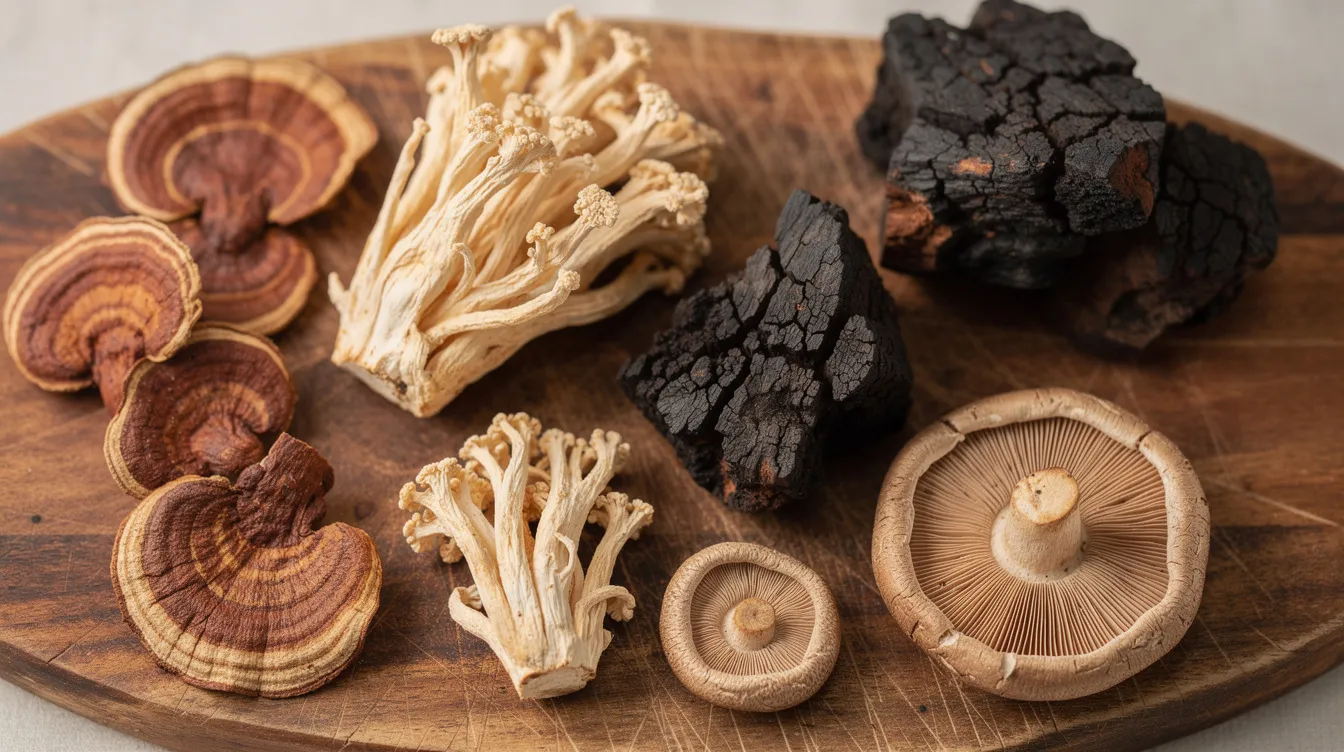
Reviews of mud wtr tend to circle around two things: the adaptogenic mushrooms and the spice-and-cacao base. Together, they shape both the taste and the potential health benefits of the product. MUD WTR contains 2,240 mg of adaptogenic mushrooms per serving, which is a meaningful dose compared to many dietary supplements that use token amounts.
Here is what each key mushroom brings to the table, based on current research:
Lion’s mane mushrooms are the star of the cognitive pitch. They are associated with supporting memory, mental clarity, and neural growth factor production. A 2024 systematic review on PubMed found bioactive polysaccharides with neural-stimulating and anti-inflammatory activity, though most evidence still comes from animal studies and small human trials.
Cordyceps mushrooms are traditionally linked to physical stamina and oxygen utilization. The claim is that they support ATP production, which could translate to more natural energy during workouts or long work sessions. Evidence is promising but limited in scope.
Chaga is included primarily for its antioxidant potential and immune support properties. MUD WTR is high in antioxidants that may reduce oxidative stress, and chaga is a significant contributor to that profile.
Reishi mushrooms lean toward the calming end: stress tolerance, sleep support, and immune modulation. These are the medicinal mushrooms most associated with well being and adaptogenic resilience.
Turkey tail appears in the Rest blend specifically, where it is included for immune function and gut health support. MUD WTR supports gut health with prebiotic fiber, and turkey tail contributes to fostering a healthy gut microbiome.
Beyond the mushroom blend, the spice and tea base does real work. The masala chai foundation uses cinnamon, cardamom, cloves, ginger, and black pepper. Cacao provides hot chocolate-like flavor notes and a mild stimulant effect via theobromine. Some blends incorporate turmeric for anti-inflammatory potential and nutmeg for warmth and mood support.
It is important to be honest about the science. Most evidence for lion’s mane cordyceps, chaga, and reishi still comes from animal or small human studies. Benefits should be framed as “may support” rather than guaranteed outcomes. That said, the combination of reduced caffeine intake plus adaptogens is central to MUD WTR’s appeal, and many reviewers specifically choose it to cut caffeine while still feeling a mental lift. MUD WTR features functional mushrooms that may support energy and focus, but it is not a pharmaceutical intervention.
How Does MUD\WTR Taste? (Real User Impressions)
Taste is the single most divisive point in mud wtr reviews. What one person describes as “a cozy spiced hot chocolate” another calls “muddy water.” Your experience depends heavily on your expectations, preparation method, and willingness to experiment.
MUD WTR is often compared to a spicy chai tea with a strong herbal aftertaste. The original blend tastes like earthy chai with chocolate notes, which makes sense given the cacao and masala chai base. You will pick up cinnamon and cardamom up front, followed by a cocoa warmth, and then an earthy, slightly bitter backbone from the mushrooms and black tea. It is closer to spiced hot cocoa than coffee ice cream in flavor profile, without the sweetness you might expect from either.
MUD WTR leaves significant sediment at the bottom of the cup. MUD WTR is described as having a gritty texture if you do not froth or blend it thoroughly. This is the number one complaint from first-time users who simply stir the powder with a spoon and expect a smooth texture.
Some users find MUD WTR’s taste earthy and less appealing, and some users find MUD WTR’s taste too earthy or bland. These are the folks who tend to leave the harshest reviews on Trustpilot and Reddit, often saying it needs significant doctoring to become palatable. Meanwhile, MUD WTR’s coffee blend offers a smoother coffee flavor for those who want something closer to traditional coffee without going full espresso.
Flavor by Blend
The rise blend delivers fall-like spices with cacao richness and an earthy mushroom undertone. If you have ever had a masala chai latte with a spoonful of cocoa powder stirred in, you are in the neighborhood.
The :matcha blend shifts toward grassy, vegetal matcha flavors. It is lighter, greener, and can taste sweeter depending on what milk you add. Your taste buds will register it as distinctly different from the Original.
The :turmeric blend is a caffeine-free golden milk-style drink. Turmeric dominates here, making it herbal and warming but occasionally polarizing for people who find turmeric overpowering.
The :rest blend leans into chamomile and rooibos for a mellow, herbal evening drink. It is the least intense of the lineup, meant to wind down rather than wake up.
What reviewers actually say (paraphrased):
Positive: “Pleasantly surprised. Tastes like a cross between hot chocolate and chai tea. It grew on me after about a week.”
Negative: “Thin and watery if you under-scoop. Bitter. The turmeric aftertaste lingers. You need a lot of creamer or sweetener to make it work.”
From Trustpilot reviews: “Even with sugar this tastes like drinking mud. Much of the powder remains undissolved.”
Mudwtr’s flavor is something you either adapt to or reject, and most people know within the first week. For more flavor and a better mouthfeel, here is what experienced users recommend:
- Use a full tablespoon (or slightly more) rather than a light scoop
- Mix with about 3/4 cup of hot water first, then add frothed milk
- Use oat milk, coconut milk, or almond milk instead of plain water
- Add honey, maple syrup, vanilla extract, or two parts coconut sugar to offset bitterness (some users also add a pinch of himalayan salt to round out the earthy taste)
- Froth with a handheld or electric frother instead of stirring with a spoon
- Try coconut creamer or a splash of mct oil for richness
The earthy flavor and earthy taste are features, not bugs, for people who enjoy chai-forward, herbaceous drinks. But if your ideal morning drink is a sweet café mocha, you will need to do some customizing.

Energy, Focus & Everyday Use: What Reviews Actually Report
Most people buying MUD WTR want one thing: steady energy and focus without coffee jitters, afternoon crashes, or sleep disruption. The question is whether it actually delivers.
Users report a smoother energy experience with fewer jitters using MUD WTR, and this is the most consistent positive theme across reviews. MUD WTR provides a calmer energy boost compared to coffee, which aligns with its dramatically lower caffeine content. MUD WTR provides energy without the jitters associated with coffee, and many multi-week testers describe a state of “calmer alertness” that sustains through the morning without the wired-then-crashed pattern that heavy coffee drinkers recognize.
Many users report improved focus and less anxiety after consuming MUD WTR. The energy and focus effect is not immediate or dramatic like espresso. Instead, reviewers describe it as a gentle lift that builds over the first 30–60 minutes and holds relatively steady. After two to four weeks of consistent use, several testers from sites like Mushroom Health Hub report reduced afternoon cravings for caffeine, better sleep quality, and a mushroom boost to their overall sense of mental clarity.
MUD WTR is often favored by those looking to cut down on coffee consumption, and the clean energy it provides is the main draw. Rather than energy drinks that spike and crash, or the sharp edge of a double shot, it offers something more like sustained energy with a gentle ramp.
But the counterpoints matter. Some reviewers feel only a subtle lift comparable to herbal tea. If you are used to the intensity of two or three cups of strong coffee, the natural energy from 35 mg of caffeine may feel like barely anything. Others notice an initial boost that fades after a few days, raising questions about placebo versus genuine adaptogenic effect. A few report no discernible change in energy or focus at all.
On the digestive front, many users switching from regular coffee report less acid reflux, fewer days of stomach upset, and smoother digestion overall. Coffee drinkers with sensitive stomachs seem to benefit the most here. However, a small number of users on Reddit report mild digestive discomfort, including nausea and loose stools, during the first few days.
Results depend heavily on context: your total sleep, diet, stress load, and how dramatically you cut caffeine intake when switching to MUD WTR all influence the outcome. Someone dropping from four cups of strong coffee to one serving of MUD WTR will have a very different transition than someone who was already drinking just one cup of green tea. The energy boost is real for many people, but it is gentler and more subtle than what coffee delivers.
Health Considerations & Safety
Most healthy adults tolerate MUD WTR well, but certain ingredients and daily dosing of adaptogenic mushrooms deserve a cautious, evidence-based discussion. This is not just a spiced beverage; it contains concentrated doses of organic mushrooms and botanicals that interact with the body in meaningful ways.
What the brand advertises for safety:
- Mushrooms grown in the U.S. using fruiting bodies (not mycelium on grain)
- Third-party heavy metal testing on every batch
- DNA testing for species verification to confirm what is on the label matches what is in the tin
- Compliance with California Prop 65 lead warnings, with the brand noting that typical exposure by weight is comparable to common root vegetables like sweet potato and carrots
MUD WTR’s mushrooms are tested for heavy metals and toxins, which is more transparency than many mushroom coffee brands offer. However, MUD WTR may expose users to lead, a known carcinogen, and the Prop 65 warning does appear on their packaging. Independent reviewers note that the amounts are consistent with what you would find in many organic root vegetables, spices, and teas, but the disclosure matters for consumers making informed choices.
Potential concerns from reviews and expert write-ups:
Certain ingredients in MUD WTR can interact with prescription medications. Reishi and cordyceps may affect blood clotting or immune response. Turmeric in therapeutic doses can interact with blood thinners and liver-metabolized drugs. Nutmeg at high doses has its own set of concerns.
MUD WTR contains turmeric, which may induce uterine contractions, and for that reason pregnant individuals should avoid MUD WTR due to potential risks. This is not a blanket scare tactic; it is a pharmacological reality with turmeric at concentrated doses.
Some users experience side effects like digestive upset or increased anxiety, particularly during the first week. The LiverTox database notes that lion’s mane side effects occur in fewer than 10% of users, typically mild gastrointestinal complaints like nausea or diarrhea, with no strong evidence of liver injury at typical doses.
If you are pregnant, nursing, on prescription medications (blood thinners, thyroid meds, antidepressants, immunosuppressants), or managing autoimmune or liver conditions, talk with a healthcare provider before adopting MUD WTR as a daily beverage. This falls into the category of dietary supplements in practice, even if it is marketed as a drink.
Start with a half serving to test your individual tolerance, especially if you have a sensitive stomach or are new to adaptogenic mushrooms.
Pricing, Subscriptions & Value for Money
MUD WTR is significantly more expensive than standard ground coffee, and that is probably the second most common complaint after taste. Here is what pricing looks like as of 2026:
| Product | One-Time Purchase | Subscription Price |
|---|---|---|
| 30-serving tin | $50 | $40 |
| 90-serving bag | $125 | $100 |
A subscription costs $40 for a 30-serving tin, working out to about $1.33 per cup. A one-time purchase of a 30-serving tin is $50, which pushes the per-cup cost to about $1.67. A 90-serving Mud bag costs $125 for a one-time purchase, and the auto-ship version of the 90-serving bag is $100, which brings the cost closer to $1.11 per serving.
Subscription discounts range from $10 to $25 off depending on product size and promotional periods. You also get flexible delivery intervals (30, 60, or 90 days), free U.S. shipping above a minimum threshold, and occasional promo codes.
MUD WTR offers a money-back guarantee for unsatisfied customers, specifically a 30-day window on your first purchase. This sounds reassuring, but we will get into why some reviewers say the refund process did not go as smoothly as expected in the next section. MUD WTR has a 30-day return policy for products, which is standard for the industry but not always honored without friction.
How does it compare in value?
If you are spending $4–$6 daily at your local coffee shop on lattes and also buying separate lion’s mane or adaptogenic supplements, MUD WTR consolidates those costs into a single cup for around $1.33. In that context, the value proposition is reasonable. You are paying for organic ingredients, a curated mushroom blend, and convenience.
On the other hand, if you are comparing it to a bag of ground coffee that costs $12 for 40+ cups, MUD WTR looks expensive. You can also build a DIY blend using bulk lion’s mane powder, cacao, chai spices, and parts coconut sugar for significantly less per cup, though you lose the convenience, quality control, and specific mushroom ratios.
Comparable alternatives from other brands like everyday dose or RYZE sometimes offer different pricing structures, caffeine profiles, or more coffee-forward flavors. Budget-conscious coffee drinkers who mainly care about taste and caffeine will likely see MUD WTR as overpriced.
Customer Service & Subscription Experience in Reviews
Many mud wtr reviews focus not just on the drink but on the experience of ordering, managing subscriptions, and dealing with support when things go wrong. This is where the brand takes its hardest hits.
What people like:
- Attractive, well-designed packaging
- Starter Kits that include a handheld frother (the “Mud Whip”), stickers, and coconut creamer samples
- Fast shipping for most U.S. orders
- The subscription model itself is flexible in theory, with adjustable intervals and easy pausing
What people consistently complain about:
Difficulties with subscription cancellation and recurring charges are reported across Trustpilot, Reddit, and independent review sites. Some customers reported issues with subscription cancellations, describing the cancellation link as buried or non-intuitive. Customers experienced unexpected charges on their accounts, sometimes weeks after they believed they had canceled.
MUD WTR’s customer service response can take over a week, and for a premium brand that charges $40+ per tin, that is a significant pain point. There is no phone or live chat support; email is the primary channel, and responses can be slow.
Specific themes that appear repeatedly in Trustpilot reviews:
- “No refund after partial use” even within the 30-day window
- Containers that seem to empty before the advertised 30 servings
- Tight lids that lead to powder spills when finally opened
- Orders canceled by the company without immediate refund processing
If reliable customer support is important to you, test it early. Send a simple question via email before your subscription renews. Screenshot your subscription settings and track your renewal date so you are not caught off guard.
This does not mean every customer has a bad experience. Plenty of users subscribe for months without issue. But the negative reviews around subscription management are frequent enough to warrant caution.
Comparisons: MUD\WTR vs Coffee and Other Coffee Alternatives
MUD WTR vs Regular Coffee
The most fundamental comparison: about 35 mg of caffeine versus roughly 90 mg in an 8 oz cup of traditional coffee. The effects mirror the numbers. MUD WTR provides less buzz, more gentle wakefulness, and noticeably less of the acidity and bitterness that coffee delivers. If your morning coffee gives you an energy boost followed by a crash two hours later, MUD WTR is designed to flatten that curve into something steadier.
But it does not taste like coffee. At all. This is not a mushroom coffee that replicates the roasted, bitter profile of a dark roast. It is a spiced cacao drink with a mushroom backbone. Expecting actual coffee flavor from MUD WTR is the fastest route to disappointment.
MUD WTR vs Matcha and Chai Tea
Matcha has higher caffeine (about 50–70 mg per serving) and strong L-theanine synergy for calm focus, but it lacks adaptogenic mushrooms. Regular chai tea offers similar spices but no lion’s mane cordyceps or reishi. MUD WTR sits in a unique space: the ritual of chai tea, the warmth of hot cocoa, and the functional mushroom stack that neither matcha nor plain chai provides.
MUD WTR vs Other Mushroom Coffee Brands
Brands like RYZE, everyday dose, and ReNude have entered the space with different approaches. RYZE tends to be more coffee-forward in taste, sometimes using actual coffee extract. Everyday dose leans into a creamier profile with added collagen and mct oil. MUD WTR is more chai-and-cacao heavy, which makes it unique but also less familiar.
Some alternatives include only one or two mushroom types (just chaga, for example) versus MUD WTR’s four-mushroom stack. Mouthfeel varies too: brands adding mct oil or collagen tend to produce a creamier, richer texture, while MUD WTR can feel thinner and spicier unless you add your own milk or creamer.
For people who love cozy hot chocolate but want less sugar and a functional twist, the rise blend can feel like a spiced, adult version of a comfort drink rather than a sugary dessert. It is not sweet on its own, so adding coconut sugar or honey helps bridge that gap.
Guidance for choosing: Pick MUD WTR if you enjoy chai spices and are okay with an earthy, not-sweet profile. Pick coffee-forward mushroom blends from other brands if you want your drink to taste as close to coffee as possible. And if you are not ready to leave coffee entirely, some users blend half a shot of coffee with MUD WTR for a half-caf transition that keeps the morning ritual familiar.

How to Get the Most Out of MUD\WTR
Many positive reviewers emphasize that MUD WTR works best as part of a broader morning routine or morning ritual rather than as a quick caffeine hit. The people who love mud wtr tend to treat preparation as an intentional practice: heating water, measuring powder, frothing, adding milk, sitting down. The ritual itself provides psychological value that a grab-and-go energy drink cannot match.
Preparation tips from experienced users:
- Use hot water (around 180°F) rather than boiling, which can make the taste more bitter
- Froth thoroughly with a handheld frother or small blender to reduce clumps and create a smooth texture
- Add your milk of choice after frothing the powder in water. Oat milk and coconut milk are the most popular for creating a latte-like consistency
- Adjust scoops to your preferred strength. A full scoop gives more flavor and a stronger mushroom boost; a light scoop can taste thin and watery
- For more flavor, try adding a pinch of cinnamon, vanilla extract, or two parts coconut sugar to one part himalayan salt
Popular customizations:
- Turn it into a latte with frothed almond milk or coconut creamer
- Add collagen or protein powder for a fuller breakfast drink
- Blend with half a shot of coffee during your transition period if you are weaning off heavy caffeine
- Sprinkle extra cinnamon or nutmeg on top
Timing matters:
Use :rise or :matcha in the morning for energy focus. Try :turmeric in the early afternoon as a caffeine-free pick-me-up that will not sabotage your sleep. Use the :rest blend in the evening to wind down. Avoid caffeinated blends after 2 PM if you are sensitive.
Give the drink at least two to four weeks of consistent daily use before judging long-term effects on mood, sleep, and cravings. The first week is often an adjustment period, especially if you are replacing multiple cups of morning coffee. Caffeine withdrawal can mask the benefits of the adaptogens, so patience matters.
Who Is MUD\WTR Best For? (And Who Should Skip It)
Ideal users:
- Health-conscious adults looking to reduce caffeine intake without losing their morning ritual
- People sensitive to coffee jitters who want clean energy from a gentler source
- Creative professionals and knowledge workers wanting calmer focus without overstimulation
- Anyone curious about adaptogenic mushrooms and immune support who wants to try them in a convenient, organic mushrooms format rather than capsules
- Coffee drinkers dealing with acid reflux, stomach burning, or sleep disruption who want a lower-impact alternative
Who may not like it:
- People who strongly dislike earthy or spiced drinks and want their beverages sweet and dessert-like
- Bargain shoppers unwilling to pay over $1 per cup for a morning drink
- Anyone expecting it to taste like a mainstream hot chocolate, a sweet café mocha, or their favorite local coffee shop latte
- Hardcore espresso fans who need strong, bitter, roasted flavor to feel like they have had a “real” morning drink
Caution groups (worth repeating):
Pregnant or breastfeeding individuals, people on multiple medications, and those with significant medical conditions should speak with a doctor before using MUD WTR as a daily beverage. This applies to anyone stacking MUD WTR with other adaptogenic supplements, as the cumulative dose of reishi mushrooms, lion’s mane, and turmeric can become pharmacologically relevant.
Start with a Starter Kit or smallest-size tin first to see if the flavor and effects match your needs before committing to large bags or long-term subscriptions. This is especially smart given the subscription management complaints we covered earlier.
MUD WTR is not magic, but for the right person-someone trading in a high-octane coffee habit for a gentler, mushroom-powered morning ritual-it can be a meaningful upgrade to their overall well being.
Frequently Asked Questions About MUD\WTR
Does MUD WTR really replace coffee?
It can, but with caveats. MUD WTR replaces the ritual and provides a milder energy boost, but it does not replicate the flavor or intensity of actual coffee. For people who want lower caffeine and are not chasing espresso-level stimulation, it works well as a daily replacement. For people who define “coffee” by its bold, roasted flavor, it will feel like a different category entirely. Think of it as an alternative morning ritual rather than a replica.
Will it keep me awake at night?
The caffeinated blends (:rise at around 35 mg, :matcha slightly higher) contain enough caffeine to mildly interfere with sleep if consumed late in the afternoon, especially for sensitive individuals. The :turmeric and :rest blends have 0 mg caffeine and are specifically designed for afternoon or evening use. Monitor your total daily caffeine intake if you are stacking MUD WTR with tea, energy drinks, or other caffeinated beverages.
Can I drink more than one cup a day?
Some users drink two cups (morning plus early afternoon), but you should track your total caffeine and adaptogen intake. Two servings of the Original blend means about 70 mg of caffeine and 4,480 mg of mushroom extracts, which is a substantial amount. Listen to your body.
Is it safe to mix with regular coffee?
Some users take a hybrid approach during their transition, mixing half coffee with half MUD WTR. There is nothing dangerous about combining caffeine sources in moderation, but it may undercut the purpose of lowering your caffeine intake and could increase the chance of stomach upset if both are strong.
Is there lead in MUD WTR?
MUD WTR carries a California Prop 65 warning for lead exposure. The brand states that its products are third-party tested and that the lead levels by weight are comparable to what you would find in common root vegetables, organic spices, and teas. Independent test data from outside labs is limited, but the risk appears low when consumed at recommended serving sizes and from verified batches.
Why is there so much sediment?
The powder is made from whole, ground organic ingredients with no synthetic solubilizers or emulsifiers. Some residue at the bottom of the cup is normal and expected. Using a frother, blender, or vigorously whisking the powder into hot water and milk dramatically reduces the gritty texture. Simply stirring with a spoon is the recipe for a chalky, unpleasant cup.
Is MUD WTR addictive?
The mushrooms in MUD WTR are non-psychoactive. There is no narcotic, hallucinogenic, or physiologically addictive component. The “addiction” some users describe is more ritual- and flavor-associated than pharmacological. You may come to rely on the morning ritual and the gentle energy focus it provides, but that is habit, not dependence.
Can I use it as a dietary supplement?
While MUD WTR is marketed as a beverage and not a supplement, it functions similarly to many adaptogenic dietary supplements in powdered form. The mushroom dosages (2,240 mg per serving of lion’s mane, cordyceps, chaga, and reishi combined) are in line with what standalone mushroom capsules offer. However, it has not undergone FDA supplement approval, so treat it as a functional food rather than a medical intervention.
Formulations, pricing, and policies may change after 2026. Always check the latest label, recall notices, and guarantee terms before purchasing.
MUD WTR occupies a genuine niche: it is not trying to be coffee, and judging it as coffee will always leave you disappointed. It is a mushroom-powered, chai-spiced, adaptogen-rich drink designed for people who want to rethink their relationship with caffeine. The science on its key ingredients is promising but not conclusive. The taste takes getting used to. The subscription model has real friction. And the price is above what most people pay for their daily cup.
But for those who stick with it-who froth it properly, who give it a few weeks, who care about organic ingredients and adaptogenic mushrooms and a calmer start to their morning-it delivers something that a regular cup of coffee simply does not.
Start small. Try a single tin. Give your taste buds time to adjust. And decide for yourself whether the trade-off between intensity and calm is one worth making.

