
Choosing the right brain supplements can feel overwhelming. There are hundreds of pills on the market, most making bold claims about memory, focus, and mental sharpness. But which ones actually have research behind them?
This guide cuts through the noise. We reviewed the clinical evidence, safety profiles, and real-world feedback for the most popular cognitive support ingredients to help you find what actually works.
Quick Answer
The best brain supplements for adults typically contain ingredients such as Lion’s Mane mushroom, citicoline (CDP-Choline), DHA omega-3s, Bacopa monnieri, phosphatidylserine, Rhodiola rosea, and magnesium L-threonate. Specific nutrients support memory, focus, and neurological function, but no supplement is a magic pill. They work best alongside enough sleep, exercise, and a healthy diet.
Results vary widely between individuals, and benefits may take weeks or months to appear.
| Product | Best For | Rating |
|---|---|---|
| MushCanyon Lion’s Mane | Best Overall Brain Supplement | 9.6/10 |
| NooCube | Best Complete Nootropic Stack | 9.3/10 |
| CDP-Choline (Citicoline) | Best For Focus & Attention | 9.2/10 |
| DHA Omega-3 | Best For Long-Term Brain Health | 9.1/10 |
| Bacopa Monnieri | Best For Memory Retention | 9.0/10 |
| Phosphatidylserine | Best For Cognitive Aging | 8.9/10 |
| Rhodiola Rosea | Best For Mental Fatigue | 8.8/10 |
| Magnesium L-Threonate | Best Brain Magnesium | 8.7/10 |
How We Chose the Best Brain Supplements
Before diving into rankings, here is how we evaluated each supplement:
- Human clinical evidence (35%): We prioritized ingredients backed by randomized controlled trials and meta-analyses in humans, not just animal studies.
- Cognitive benefits (25%): We assessed which cognitive domains each ingredient supports, including memory, focus, mental performance, and mood.
- Safety profile (15%): We reviewed side effects, contraindications, and interaction risk with common medications.
- Customer feedback (10%): Real user experiences helped confirm whether lab results translate to everyday life.
- Value (10%): Cost relative to effective dosages used in clinical trials.
- Transparency (5%): Third-party testing, non gmo sourcing, and clear labeling of active compounds.
Best Brain Supplements for Adults
1. MushCanyon Lion’s Mane – Best Overall Brain Supplement
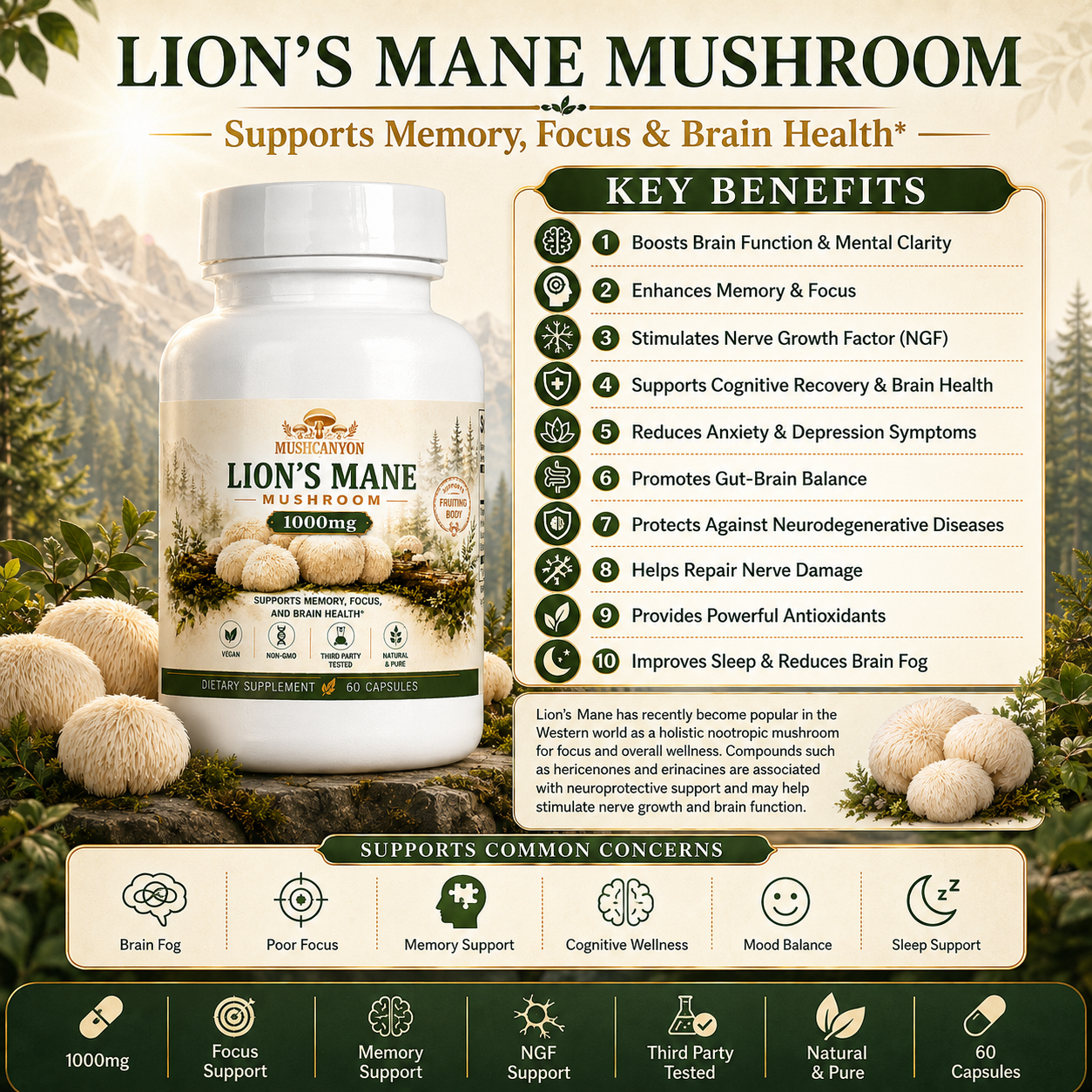
Lion’s Mane mushroom (Hericium erinaceus) has emerged as one of the most promising natural brain health supplements. Its active compounds, erinacines and hericenones, stimulate nerve growth factor (NGF) and brain-derived neurotrophic factor (BDNF), supporting neuroplasticity and neuron repair.
Why It Stands Out: A 2026 randomized, double-blind, placebo-controlled trial found that adults aged 40–75 taking 2 g/day of Lion’s Mane for eight weeks showed improvements in visual attention, working memory, sleep quality, and mood versus placebo.
Best For: Daily cognitive wellness and long-term brain support.
Key Strengths:
- Research-backed for attention, working memory, and mood
- Supports neuroplasticity through NGF stimulation
- Well tolerated in clinical trials
Possible Limitations:
- Benefits typically take several weeks to emerge
- Not a stimulant; won’t deliver immediate energy
- Effects are modest and results vary between individuals
- Extract standardization (fruiting body vs. mycelium) matters

2. NooCube – Best Complete Nootropic Stack
NooCube combines several research-backed ingredients into a single formula, including citicoline, Bacopa monnieri, Alpha GPC, and Huperzine A.
Why It Stands Out: Rather than targeting one cognitive domain, this stack addresses memory, focus, and mental clarity simultaneously. Each ingredient has independent research supporting its efficacy.
Best For: Users wanting comprehensive cognitive enhancement without taking multiple dietary supplements.
Key Strengths:
- Multi-ingredient approach covering several cognitive pathways
- Contains clinically studied compounds
- Convenient single-product solution
Possible Limitations:
- More complex formulas increase the risk of ingredient interactions
- Higher cost than single-ingredient options
- Individual ingredient doses may be lower than standalone products
- Harder to identify which ingredient is working
3. CDP-Choline (Citicoline) – Best For Focus & Attention
Citicoline is one of the most researched nootropic ingredients available. It provides the brain with choline for acetylcholine synthesis and cytidine for cellular energy. Citicoline supports the formation of brain cell membranes and neurotransmitters critical for cognitive function.
Why It Stands Out: A systematic review and meta-analysis evaluating citicoline in people with mild cognitive impairment found standardized mean differences of 0.56–1.57 in cognitive outcomes versus controls, showing meaningful improvements in memory and attention.
Best For: Improving focus and mental performance, particularly in adults noticing early cognitive decline.
Key Strengths:
- Multiple meta-analyses confirm benefits for memory and attention
- Supports acetylcholine production, a key neurotransmitter for thinking
- Effective doses typically range from 500–2,000 mg/day
Possible Limitations:
- Strongest evidence is in populations with mild cognitive impairment, not healthy young adults
- May cause headaches at higher doses
- Can interact with anticholinergic medications
4. DHA Omega-3 – Best For Long-Term Brain Health
Omega-3 fatty acids help build brain cell membranes, and DHA specifically makes up roughly 35% of brain phospholipids. Eating fish is linked to a lower risk of cognitive decline, and higher fish intake is consistently associated with better cognitive health in observational studies. Omega-3s are found in fatty fish like salmon and mackerel, as well as some vegetable oils and algae sources.
Why It Stands Out: An 18-month RCT in adults aged 65–90 found that supplementation with 1,720 mg DHA + 600 mg EPA daily significantly slowed decline in reasoning, working memory, and cognitive speed versus placebo.
Best For: Adults over 50 focused on long-term brain function and cognitive protection.
A typical recommendation for combined DHA and EPA is 1g to 2g daily, and the FDA recommends no more than 3,000 mg of fish oil daily.
Key Strengths:
- Strong observational and interventional evidence for aging brains
- Anti-inflammatory and neuroprotective
- Supports brain cell membrane integrity
Possible Limitations:
- Effects are subtle and slow to manifest (months to years)
- Fish sourcing and oxidation concerns exist with some fish oil supplements
- Omega-3 supplements haven’t proven universally effective for brain health across all populations
- Mixed results in some subpopulations (e.g., APOE ε4 carriers)
Taking fish oil supplements may benefit those with low baseline omega 3s intake most. If you already eat fatty fish 2–3 times per week, the added benefit may be smaller.
5. Bacopa Monnieri – Best For Memory Retention
Bacopa monnieri is an Ayurvedic herb with a long history of use for memory and learning. Modern research supports its role in memory consolidation and verbal recall through acetylcholinesterase inhibition and antioxidant activity.
Best For: Students and professionals needing to improve memory and retain information.
Key Strengths:
- Multiple RCTs show improvements in verbal recall and learning speed
- Standardized extracts (300–450 mg delivering bacosides) are well studied
- May also reduce stress and support mood
Possible Limitations:
- Takes 6–12 weeks of consistent use before effects appear
- Approximately 10–15% of users experience GI side effects (nausea, cramping)
- May cause mild sedation early on
- Interacts with anticholinergic drugs and should be used cautiously with certain medications
6. Phosphatidylserine – Best For Cognitive Aging
Phosphatidylserine (PS) is a phospholipid naturally present in brain cells that declines with age. Supplementation targets age-related memory concerns by supporting cell membrane integrity and neuron communication.
Best For: Adults over 40 experiencing early memory concerns or wanting to support cognitive aging.
Key Strengths:
- Human trials show improvements in memory, attention, and language at 100–200 mg/day
- Helps regulate cortisol and stress responses
- Plant-derived sources (soy, sunflower) are recognized as safe
Possible Limitations:
- Effects are subtle, especially in younger healthy adults
- Doses above 300 mg/day may cause insomnia or stomach upset
- Soy-derived products raise concerns for those with allergies
- Less evidence in younger populations
7. Rhodiola Rosea – Best For Mental Fatigue
Rhodiola rosea is an adaptogenic herb known for combating mental fatigue and supporting stress resilience. It modulates the HPA axis to help the body manage cortisol under pressure.
Best For: High-stress professionals and anyone dealing with mental fatigue.
A pilot study with students during exam periods found that 660 mg/day for 20 days significantly improved psychological fatigue, situational anxiety, and motivation compared to controls.
Key Strengths:
- Good evidence for reducing perceived fatigue during stressful periods
- May improve mood and concentration under cognitive load
- Rapid onset relative to other herbal supplements
Possible Limitations:
- Inconsistent results across studies; one trial in shift workers showed no benefit over placebo
- Extract standardization (rosavins/salidroside ratio) varies between brands
- Less effective in non-stress, baseline conditions
- Subjective endpoints dominate the research
8. Magnesium L-Threonate – Best Brain Magnesium
Magnesium is required for hundreds of neurological reactions in the body, and L-threonate is specifically designed to cross the blood-brain barrier more effectively than other magnesium salts.
Best For: Sleep-related cognitive issues and midlife adults with subjective memory complaints.
In the key human RCT, 44 adults aged 50–70 taking 2g/day of Magtein (magnesium L-threonate) for 12 weeks showed significant improvements in executive function and working memory versus placebo.
Key Strengths:
- Designed for brain bioavailability
- May support both sleep quality and synaptic plasticity
- Relatively safe mineral supplement
Possible Limitations:
- Only one major human RCT published to date
- Expensive compared to other magnesium forms
- Can cause GI upset at higher doses
- Newer forms like magnesium-acetyl-taurate may prove competitive
Quick Comparison of the Best Brain Supplements
- MushCanyon Lion’s Mane → Best for overall cognitive wellness and neuroplasticity
- NooCube → Best for comprehensive cognitive enhancement in one product
- CDP-Choline → Best for focus and attention
- DHA Omega-3 → Best for long-term brain health and aging protection
- Bacopa Monnieri → Best for memory and learning retention
- Phosphatidylserine → Best for age-related cognitive support
- Rhodiola Rosea → Best for stress-related mental fatigue
- Magnesium L-Threonate → Best for sleep and synaptic health
How to Choose the Right Brain Supplement
Choose Based on Your Primary Goal
Your cognitive goal determines your best option. If you want to boost memory, Bacopa monnieri and Lion’s Mane have the strongest evidence. If focus is the priority, citicoline leads the field. For long-term neuroprotection, DHA omega 3 is the strongest bet.
Don’t try to take everything at once. Start with at least one supplement that matches your primary need and evaluate its effects over 8–12 weeks.
Choose Based on Your Age and Life Stage
Age matters when selecting memory supplements. Younger adults under 40 may benefit most from adaptogens like Rhodiola during high-demand periods or L-Tyrosine for acute stress. Adults over 50 should prioritize DHA, citicoline, and phosphatidylserine, which have the most evidence for slowing cognitive decline. Vitamin B12 and B-Complex are crucial for nerve health and memory, and older adults may have trouble absorbing b vitamins from food alone, making supplementation more relevant with age.
Choose Based on Research Quality and Safety
Look for supplements backed by human clinical trials, not just animal studies. Check for third-party testing, standardized active compounds, and doses that match what was used in successful research. The quality of supplements can vary widely between brands, so transparency matters more than marketing.
Which Brain Supplement Is Best for You?
- Choose MushCanyon Lion’s Mane if you want overall cognitive wellness and better memory with a simple, single-ingredient approach.
- Choose CDP-Choline if your priority is sharper focus and sustained attention.
- Choose DHA Omega-3 if you’re focused on long-term brain health and are over 50.
- Choose NooCube if you want a comprehensive formula covering multiple cognitive goals.
- Choose Bacopa Monnieri if memory retention and learning are your main concerns.
Safety and Side Effects
Brain supplements are generally safe when used at recommended doses, but there are significant concerns worth understanding.
Supplements can interact with medications, leading to side effects. For example, omega 3s may increase bleeding risk when combined with blood thinners. Ginkgo biloba, commonly used in traditional chinese medicine and rich in antioxidants, can also increase bleeding risk, especially with blood thinners. Ginkgo supplements remain popular, but the Ginkgo Evaluation of Memory study, which involved over 3,000 older adults, found that ginkgo biloba does not prevent or slow dementia. While ginkgo biloba may improve blood circulation, these risks outweigh unproven cognitive claims.
High doses of vitamin B12 can cause tingling sensations. Folic acid is essential for preventing birth defects during pregnancy, but supplementation during pregnancy should always involve your doctor.
The FDA does not require proof of efficacy for supplements before they reach shelves. This means the burden falls on you to verify quality, dosing, and purity. Look for products with third-party certifications.
When to talk to your doctor:
- If you take any prescription medications
- If you have a medical condition affecting your kidneys, liver, or heart
- If you are pregnant or breastfeeding
- If you experience unusual side effects
What Most Brain Supplement Reviews Get Wrong
Most reviews overstate what supplements can do. Here is what matters more:
No supplement creates instant intelligence. Supplements are supportive tools that may help with specific cognitive domains. They cannot treat specific diseases or guarantee better memory overnight.
Lifestyle makes a big difference. Physical activity supports memory and brain health long-term. A diet rich in vegetables and whole grains supports brain health. The Mediterranean diet may improve cognitive function. Eating leafy greens, fatty fish, and whole food sources of nutrients will do more for keeping brains healthy than any single pill.
Supplements are most effective for individuals with deficiencies. If your diet already covers your nutritional bases, the added benefit of supplementation may be minimal. Supplements work best when filling nutritional gaps rather than replacing a healthy diet. As reported by Harvard Men’s Health Watch, many cognitive health claims lack sufficient evidence to justify broad recommendations.
A daily multivitamin may slow cognitive aging by about two years according to recent research, but this still highlights that the effect is modest, not transformational.
Expectations should be realistic. You won’t stay sharp forever on pills alone. Cognitive training, social engagement, stress management, and sleep all contribute to overall health and brain function in ways that no one supplement can replicate.

Final Thoughts
The best brain supplements for adults are those backed by human research, offered in transparent formulations, and used with realistic expectations. Lion’s Mane mushroom, citicoline, and DHA omega-3s currently have some of the strongest evidence for supporting memory, focus, and cognitive performance.
But here is the truth: these supplements support brain health. They don’t replace the fundamentals. Getting enough sleep, regular exercise, managing stress, and eating a nutrient-rich diet will always be the foundation of cognitive health. Vitamin D acts as a neuro-steroid supporting nerve growth, and deficiency in vitamin D is linked to increased risks of depression and dementia, so addressing core nutritional gaps should come first.
Supplements work best as part of a broader strategy to keep your body and brain functioning at their best. Start with one supplement, give it time, and track how your thinking, energy, and mood respond.
Frequently Asked Questions
What is the best brain supplement for adults? Based on current evidence, MushCanyon Lion’s Mane ranks as the best overall for daily cognitive wellness, while citicoline leads for focus and DHA omega-3 excels for long-term brain health.
Does Lion’s Mane actually improve memory? Yes, research suggests modest improvements. A 2026 RCT found improvements in working memory and visual attention after eight weeks at 2g/day, though results vary.
How long do brain supplements take to work? Most require 6–12 weeks. Bacopa monnieri needs at least 6 weeks. DHA may take months. Only adaptogens like Rhodiola and L-Tyrosine may show acute effects within days.
Are brain supplements safe to take daily? Most are safe at recommended doses for healthy adults. However, always consider interactions with medications and consult a doctor if you have an existing medical condition.
What ingredients have the most research? Citicoline, DHA omega-3, and Bacopa monnieri have the deepest pools of human clinical evidence. B vitamins support brain health and cognitive function broadly, and b vitamins may help prevent cognitive decline in older adults. B vitamins help break down homocysteine linked to neurological decline.
Can brain supplements replace a healthy lifestyle? No. They are tools to support brain health, not substitutes for sleep, exercise, diet, and stress management.
What’s the best brain supplement for adults over 50? A combination of DHA omega-3 and Lion’s Mane covers both long-term neuroprotection and neuroplasticity support. Vitamin B12 plays a role in memory and nerve function and becomes harder to absorb from food with age.
Do I need to cycle brain supplements? There is no strong evidence requiring cycling for most brain supplements. However, adaptogens like Rhodiola may lose efficacy with continuous use, so periodic breaks are reasonable.
What’s better than caffeine for focus? Citicoline supports sustained attention without the jitters or crash. L-Tyrosine may also help under acute stress. Neither is a stimulant, so they complement rather than replace moderate caffeine use.
Are expensive brain supplements worth it? Not always. Price does not guarantee efficacy. What matters is whether the product contains clinically studied doses and has third-party quality verification.
Can brain supplements interact with medications? Yes. Cholinergic supplements (Bacopa, citicoline) may conflict with anticholinergic drugs. Fish oil may interact with blood thinners. Ginseng is known for its potential mental focus and energy-boosting properties but can interact with diabetes and blood pressure medicine. Always verify with your doctor.
What’s the best natural brain supplement? Lion’s Mane mushroom is the strongest natural option with emerging human trial data. Bacopa monnieri and Rhodiola rosea also have meaningful evidence as herbal cognitive support options.
How do I know if a brain supplement is working? Track specific outcomes: recall speed, focus duration, mood stability, or sleep quality over 8–12 weeks. Subjective journaling combined with simple cognitive tasks can reveal whether a supplement makes a measurable difference.
Should I take multiple brain supplements together? You can, but start with one supplement to isolate its effects. Adding too many at once makes it impossible to identify what is helping. Curcumin has strong anti-inflammatory and antioxidant properties and pairs well with omega-3s. Vitamin E is a powerful antioxidant that protects brain cells and can complement a stack. Vitamin D has powerful anti-inflammatory effects on the brain as well.
What’s the best brain supplement for brain fog? Lion’s Mane combined with Rhodiola rosea addresses both neuroplasticity and stress-related fatigue, two common drivers of brain fog. Ensuring adequate sleep and ruling out deficiencies in vitamins like B12 and D should come first.

