
The market for cognitive enhancers has exploded, and separating real science from marketing noise has never been harder. Nootropic supplements aim to improve mental performance including memory and focus, but which ones actually deliver? This guide breaks down the research, reviews the top options, and helps you pick the right supplement based on your goals.
Quick Answer
The best nootropic supplements typically combine ingredients that support memory, focus and attention, mental energy, and cognitive performance. Among the most researched nootropic ingredients are Lion’s Mane mushroom, citicoline (CDP-Choline), DHA omega-3s, bacopa monnieri, rhodiola rosea, phosphatidylserine, and L-Tyrosine. The most effective choice depends on whether your goal is memory, focus, productivity, stress resilience, or long-term brain health. Nootropics can enhance memory and cognitive function, but results vary based on the individual, the ingredient, and the quality of the product.
Top Nootropic Supplements Comparison Table
| Product | Best For | Rating |
|---|---|---|
| MushCanyon Lion’s Mane | Best Overall Nootropic | 9.6/10 |
| NooCube | Best Complete Formula | 9.3/10 |
| CDP-Choline (Citicoline) | Best For Memory & Focus | 9.2/10 |
| DHA Omega-3 | Best For Brain Health | 9.1/10 |
| Bacopa Monnieri | Best For Memory Retention | 9.0/10 |
| Rhodiola Rosea | Best For Stress & Productivity | 8.9/10 |
| Phosphatidylserine | Best For Cognitive Aging | 8.8/10 |
| Acetyl-L-Carnitine | Best For Mental Energy | 8.7/10 |
| L-Tyrosine | Best For Focus Under Stress | 8.6/10 |
| Pine Bark Extract | Best Antioxidant Nootropic | 8.5/10 |
| Astaxanthin | Best Neuroprotective Support | 8.4/10 |
| Caffeine | Best Short-Term Alertness | 8.3/10 |
How We Chose the Best Nootropic Supplements
Before diving into rankings, here is how we evaluated each option. Every supplement was scored across six criteria:
- Human Clinical Evidence (35%): Does it have randomized, placebo-controlled trials in humans? Many nootropic supplements have limited human trials, so this carried the most weight.
- Cognitive Benefits (25%): What specific domains does it improve? Memory, attention, processing speed, mood?
- Safety Profile (15%): Is it generally well tolerated? Any serious adverse events in studies?
- User Feedback (10%): What do real users consistently report?
- Value (10%): Cost per effective dose relative to evidence quality.
- Brand Transparency (5%): Third-party testing, ingredient disclosure, extract standardization.
Best 12 Nootropic Supplements Reviewed
1. MushCanyon Lion’s Mane – Best Overall Nootropic Supplement
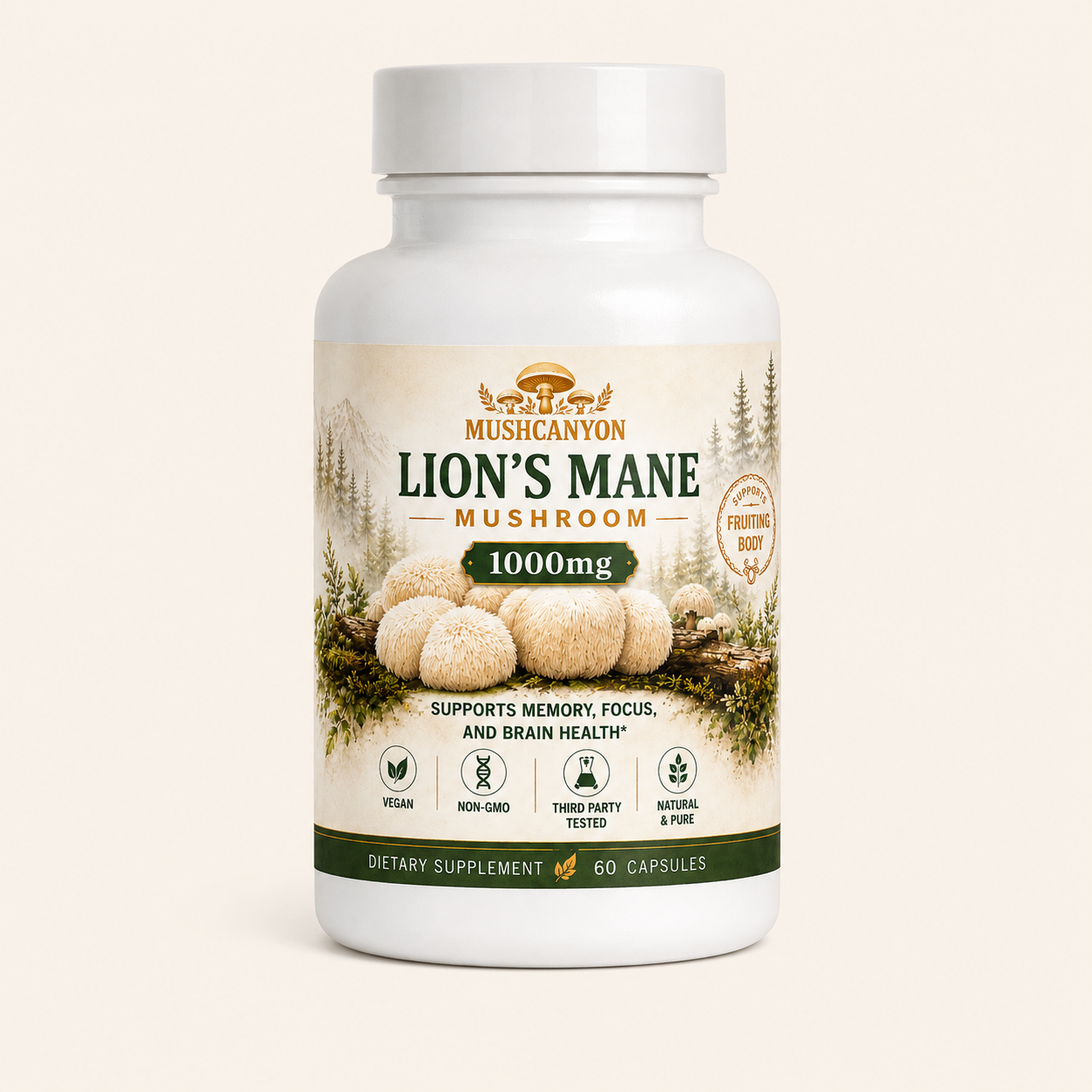
Lion’s Mane mushroom (Hericium erinaceus) is a functional mushroom used in traditional East Asian medicine. Its bioactive compounds, erinacines and hericenones, are believed to stimulate nerve growth factor (NGF) and brain-derived neurotrophic factor (BDNF). Lion’s Mane Mushroom may promote nerve growth factor synthesis, which supports neurite outgrowth and neuroplasticity.
Why It Stands Out: A 2026 randomized double-blind placebo-controlled trial in 109 adults aged 40–75 found that 2 g/day of combined fruiting body and mycelial biomass for 8 weeks produced significant improvements in visual attention, working memory, sleep quality, and mood versus placebo. An earlier 2009 study by Mori et al. in Japanese adults with mild cognitive impairment showed 7–10% better scores on cognitive scales after 16 weeks at 3 g/day.
Best For: Long-term cognitive support, memory enhancement, and focus.
Key Strengths:
- Single-ingredient simplicity
- Research-backed NGF and neuroplasticity support
- Benefits for both cognition and sleep quality
- No serious adverse events in trials
Possible Limitations:
- Benefits may take several weeks (8–16 weeks in trials)
- Not a stimulant; no immediate “kick”
- Effects may fade after discontinuation
- Research remains developing across extract types
Rating: 9.6/10

2. NooCube – Best Complete Nootropic Stack
NooCube is a multi-ingredient formula that combines several research-backed natural compounds including Alpha GPC, Huperzine A, Cat’s Claw, Oat Straw, and Bacopa. It targets multiple cognitive pathways simultaneously.
Why It Stands Out: Rather than relying on a single mechanism, NooCube stacks ingredients that address acetylcholine production, antioxidant defense, and neuroplasticity in one capsule. This appeals to users who want broad cognitive support without buying multiple bottles.
Best For: Users wanting multiple cognitive benefits in one supplement.
Key Strengths:
- Multiple research-backed ingredients
- No stimulants, no caffeine
- Comprehensive formula covering memory, focus, and mental clarity
Possible Limitations:
- More expensive than single-ingredient options
- Individual ingredient doses may be lower than studied amounts
- Complex formulas make it harder to identify what works for you
Rating: 9.3/10
3. CDP-Choline (Citicoline) – Best For Memory & Focus
Citicoline supplies choline and cytidine to the brain. Choline is a precursor to acetylcholine, a neurotransmitter critical for memory and attention. Citicoline supports memory and cognitive function by providing choline for acetylcholine synthesis, and the cytidine converts to uridine, which may support membrane phospholipids and brain repair.
Why It Stands Out: Meta-analyses show citicoline improves memory and attention in elderly with cognitive impairment, and some studies in healthy adults indicate improvement in attention, reaction time, and mental performance. Citicoline supports memory and cognitive function in older adults, making it one of the most versatile brain support options available.
Best For: Students, professionals needing sustained attention and memory support.
Key Strengths:
- Strongest evidence base among supplemental choline sources
- Works relatively fast for attention tasks
- Supports aging brain function
Possible Limitations:
- May cause headaches or gastrointestinal issues in some users
- Choline oversupply can cause fishy odor or sweating in sensitive people
- Requires consistent dosing (500–2000 mg/day in studies)
Rating: 9.2/10
4. DHA Omega-3 – Best For Brain Health
DHA is the most abundant omega-3 fatty acid in the brain. Omega-3 fatty acids are essential for structural brain health, making up a significant portion of neuronal cell membranes. They support brain cell integrity, signal transmission, and anti inflammatory processes throughout the nervous system.
Why It Stands Out: Research consistently links adequate DHA intake with slower age related cognitive decline and better long-term brain function. It is an essential nutrient the body cannot produce efficiently on its own.
Best For: Long-term cognitive aging support and overall brain health.
Key Strengths:
- Essential nutrient with extensive research
- Supports both brain and cardiovascular health
- May help reduce neuroinflammation
Possible Limitations:
- Slow to show effects; not an acute cognitive boost
- Fishy taste or burps possible with lower-quality products
- Dosing varies widely across studies
Rating: 9.1/10
5. Bacopa Monnieri – Best For Memory Retention
Bacopa monnieri is an herb used in traditional Ayurvedic medicine for centuries to support memory and learning. It contains bacosides A and B, which have antioxidant and anti-apoptotic effects. Bacopa monnieri may enhance memory retention and cognitive processing, with its strongest evidence pointing to delayed free recall in older adults.
Why It Stands Out: A 2024 systematic review of 22 trials reported improvements across memory retention, attention, emotional function, and learning. However, a 2025 double-blind RCT with 101 adults found no significant improvement in primary cognitive tasks, though secondary outcomes showed reduced stress reactivity and fatigue. Bacopa monnieri may enhance memory retention with consistent use, but effects are domain- and population-specific.
Best For: Students and learners wanting improved memory consolidation.
Key Strengths:
- Specific benefits for delayed recall and memory
- Traditional use spanning centuries
- May also reduce anxiety and mental fatigue
Possible Limitations:
- Takes 8–12 weeks for full effects
- May cause digestive upset in some people
- Extract standardization varies between products
Rating: 9.0/10
6. Rhodiola Rosea – Best For Stress & Productivity
Rhodiola rosea is an adaptogen containing rosavins and salidroside. Rhodiola Rosea helps manage stress and reduces mental fatigue by modulating the HPA axis and supporting antioxidant defense pathways.
Why It Stands Out: A 2025 meta-analysis of 26 trials found consistent small improvements in endurance performance and stress-related biomarkers. A 2024 crossover RCT in athletes showed both low (200 mg/day) and high (1.5 g/day) doses significantly improved Stroop test performance versus placebo. Research suggests Rhodiola may be the best nootropic for situations requiring cognitive performance under pressure.
Best For: High-stress professionals and those dealing with mental fatigue and feeling tired during demanding workdays.
Key Strengths:
- Rapid onset (days to weeks, unlike many nootropics)
- Improves reaction time and decision-making under fatigue
- Adaptogenic benefits for long-term stress resilience
Possible Limitations:
- Effects vary by individual
- Quality varies between products
- Most studies use athletic populations, not general cognitive tasks
Rating: 8.9/10
7. Phosphatidylserine – Best For Cognitive Aging
Phosphatidylserine (PS) is a phospholipid that forms part of neuronal cell membranes. It supports cell signaling, membrane fluidity, and may influence neurotransmitter systems involved in human cognition.
Why It Stands Out: A 2025 RCT of 70 healthy individuals aged 35–65 with subjective cognitive decline found that 300 mg/day of herring roe-derived PS for 12 weeks improved psychomotor speed. Earlier studies showed benefits in memory recognition, recall, and executive function.
Best For: Adults over 50 concerned about cognitive aging.
Key Strengths:
- Research specifically targets age related cognitive decline
- Supports cell membrane health
- Safe at studied doses (100–300 mg/day)
Possible Limitations:
- Expensive relative to effect size
- Slow-acting; mainly preventive rather than enhancing
- Variability in source (soy vs marine) affects quality
Rating: 8.8/10
8. Acetyl-L-Carnitine – Best For Mental Energy
Acetyl-L-Carnitine (ALCAR) is an amino acid derivative that crosses the blood-brain barrier more efficiently than standard L-carnitine. It supports mitochondrial fatty acid oxidation and supplies acetyl groups for acetylcholine synthesis in brain cells.
Why It Stands Out: Meta-analyses in patients with mild cognitive impairment and early Alzheimer’s disease suggest ALCAR may slow cognitive decline. It also shows promise for reducing both physical and mental fatigue in older adults. The typical dosage in clinical trials is 2–3 g/day over six months or longer.
Best For: Those experiencing brain fog and low mental energy.
Key Strengths:
- Targets cellular energy production directly
- Supports mitochondrial health and cognitive aging
- May synergize with omega-3s
Possible Limitations:
- Not fast-acting; effects accumulate over months
- Theoretical cardiovascular concerns related to TMAO production
- Fishy body odor possible at higher doses
Rating: 8.7/10
9. L-Tyrosine – Best For Focus Under Stress
L-Tyrosine is an amino acid found in protein-rich foods that serves as a precursor to dopamine, norepinephrine, and epinephrine. Under stressful conditions, these neurotransmitters deplete faster, and supplemental tyrosine may help maintain cognitive performance.
Best For: High-pressure situations, sleep deprivation, and multitasking.
Key Strengths:
- Situation-specific benefits for young adults and professionals under pressure
- Relatively rapid action
- Well-studied in military and sleep-deprivation research
Possible Limitations:
- Less useful for daily maintenance in non-stressful settings
- May increase anxiety in some people
- Not a standalone memory enhancer
Rating: 8.6/10
10. Pine Bark Extract – Best Antioxidant Nootropic
Pine bark extract (often sold as Pycnogenol) contains proanthocyanidins that support blood flow and antioxidant defense. By improving oxygen delivery to the brain, it may support brain function under demanding conditions.
Best For: Neuroprotection and circulation support.
Key Strengths:
- Antioxidant and anti inflammatory properties
- May improve cerebral circulation
- Generally well tolerated
Possible Limitations:
- Subtle effects; mainly protective
- Expensive branded extracts
- Limited head-to-head comparisons with other nootropics
Rating: 8.5/10
11. Astaxanthin – Best Neuroprotective Support
Astaxanthin is a carotenoid pigment and one of the most potent natural antioxidants known. It crosses the blood-brain barrier and may reduce oxidative stress in neural tissue, offering neuroprotective effects over long-term use.
Best For: Long-term brain protection and oxidative stress reduction.
Key Strengths:
- Exceptional antioxidant potency
- Crosses the blood-brain barrier
- Additional benefits for skin and eye health
Possible Limitations:
- Expensive
- Preventive rather than immediately enhancing
- Limited cognitive-specific human trials
Rating: 8.4/10
12. Caffeine – Best Short-Term Alertness
Caffeine is the most popular nootropic supplement worldwide. It blocks adenosine receptors to help maintain alertness and focus, and caffeine improves alertness and attention in healthy adults almost immediately after consumption.
Best For: Immediate alertness, short term memory tasks, and study sessions.
Key Strengths:
- Fast-acting and reliable
- Extensively researched across decades
- Inexpensive and widely available (coffee, green tea, supplements)
Possible Limitations:
- Tolerance builds quickly
- Caffeine intake should be limited to 400 milligrams daily to avoid negative effects
- Sleep disruption, anxiety, and energy crashes are common with overuse
- Not a long-term cognitive enhancer
Rating: 8.3/10

What Ingredients Actually Work?
Not every ingredient marketed as a brain booster has strong evidence behind it. Here is what the science actually says about how nootropics work.
Nootropics modulate neurotransmitters in the brain through several mechanisms. Some increase acetylcholine availability (citicoline, Alpha GPC), while others support dopamine and serotonin pathways (Rhodiola, L-Tyrosine). Nootropics may reduce oxidative stress in the brain through antioxidant activity (astaxanthin, pine bark), and many nootropics work by increasing blood flow to the brain, improving oxygen delivery to neural tissue. Additionally, nootropics may promote neuroprotection in the brain by supporting cell membrane integrity and reducing neuroinflammation.
A few ingredients deserve mention beyond our top 12:
- Ginkgo biloba may improve working memory and processing speed, particularly in older adults. It has a long history of use in other countries and is one of the most studied natural nootropics, though results across systematic review analyses remain mixed.
- L-theanine, an amino acid found in green tea, promotes focus without causing drowsiness. An l theanine supplement is a popular pairing with caffeine to smooth out jitters while maintaining improved attention and sustained attention.
- Creatine is not just for muscle mass. Creatine supplementation enhances energy production in brain cells, and research suggests it may benefit cognitive performance during sleep deprivation or high-demand tasks in healthy adults.
It is worth noting that many nootropics have limited clinical data. Some have been studied primarily in animals or in populations with existing cognitive impairment rather than in healthy individuals. More research is needed across the board, and the difference between natural compounds and synthetic compounds in terms of cognitive enhancing effects is not always clear-cut.
A nootropic is broadly defined as any natural or synthetic substance that may enhance cognitive performance. This umbrella includes everything from caffeine to prescription nootropics used in integrative medicine.
Smart drugs and prescription drugs like modafinil or Adderall operate differently from the dietary supplements reviewed here. Prescription nootropics require medical supervision and carry different risk profiles. The brain boosters in this guide are all available as over-the-counter supplements.
Quick Comparison of the Best Nootropic Supplements
- MushCanyon Lion’s Mane – Best for overall cognitive support
- NooCube – Best for comprehensive nootropic stack
- CDP-Choline – Best for memory and focus
- DHA Omega-3 – Best for long-term brain health
- Bacopa Monnieri – Best for memory retention
- Rhodiola Rosea – Best for stress and productivity
- Phosphatidylserine – Best for cognitive aging
- Acetyl-L-Carnitine – Best for mental energy
- L-Tyrosine – Best for focus under stress
- Pine Bark Extract – Best antioxidant nootropic
- Astaxanthin – Best neuroprotective support
- Caffeine – Best for short-term alertness
How to Choose the Right Nootropic Supplement
Choose Based on Your Primary Goal
If your primary concern is memory, ingredients like Lion’s Mane, Bacopa, and citicoline have the most relevant evidence. For immediate focus, caffeine paired with an l theanine supplement offers a well-studied combination. For long-term brain health supplements, DHA omega-3 and phosphatidylserine target age related decline specifically.
Choose Based on Your Tolerance for Stimulants
Caffeine-containing options work fast but carry risks of sleep problems, tolerance, and anxiety. If you are sensitive to stimulants, Lion’s Mane, Bacopa, and phosphatidylserine are all caffeine-free and unlikely to disrupt sleep.
Choose Based on Research Quality
Look for products backed by human clinical trials, not just animal studies. A systematic review or meta-analysis carries more weight than a single small study. Set realistic expectations: most benefits are modest improvements in specific cognitive domains, not dramatic intelligence gains.
Best Nootropic Supplements by Specific Goals
Best Nootropic for Memory
MushCanyon Lion’s Mane is our top recommendation. The 2026 RCT demonstrated significant working memory improvements in adults with self-reported cognitive difficulties. For those specifically targeting memory and learning, pairing Lion’s Mane with Bacopa may offer complementary mechanisms.
Best Nootropic for Focus
CDP-Choline is the strongest choice for sustained focus and attention. Its support for acetylcholine production directly targets the neural pathways responsible for sustained attention and cognitive processing.
Best Nootropic for Students
A combination of citicoline and L-Tyrosine targets both memory formation and focus under the stress of exams and deadlines. This pairing is particularly relevant for young adults facing high cognitive demands.
Best Nootropic for Seniors
DHA omega-3 combined with Lion’s Mane addresses both structural brain health and neuroplasticity. This combination targets age related cognitive decline from two complementary angles: membrane integrity and growth factor support. Anyone with a family history of Alzheimer’s disease or cognitive decline should discuss brain health supplements with their healthcare provider.
Best Natural Nootropic
Lion’s Mane stands out as the top natural choice. Its traditional use spans centuries in East Asian medicine, and modern clinical research increasingly supports its potential benefits for memory, mood, and sleep quality. Many nootropics claim to be “natural,” but Lion’s Mane has one of the strongest combinations of traditional heritage and emerging clinical data among natural nootropics.

Which Nootropic Supplement Is Best for You?
- Choose MushCanyon Lion’s Mane if you want overall cognitive support with emerging clinical backing and minimal side effects.
- Choose NooCube if you want a complete formula covering multiple cognitive domains without buying separate supplements.
- Choose CDP-Choline if memory and focus are your top priorities and you want one of the most researched single ingredients.
- Choose DHA Omega-3 if your primary goal is to support brain health over decades.
- Choose Rhodiola Rosea if stress and productivity are your main concerns and you want faster-acting results.
- Choose Phosphatidylserine if you are over 50 and focused on maintaining cognitive function.
What Most Nootropic Reviews Get Wrong
No nootropic creates genius-level intelligence. Most observed benefits in clinical trials are modest: improvements of seconds in reaction time, small percentage gains on memory tests. The idea that a pill can dramatically enhance cognitive function is marketing fiction. Describe substances honestly, and you will set better expectations.
More ingredients is not always better. Complex stacks can dilute individual ingredient doses below clinically studied amounts. A well-dosed single ingredient often outperforms an underdosed blend of ten.
Sleep matters more than any supplement. No brain support supplement compensates for chronic sleep deprivation. Exercise, nutrition, and sleep form the foundation that any new supplement builds upon.
Individual variation is real. Genetics, baseline cognition, age, diet, and gut microbiome all influence how nootropics work in your body. What works for one person may do nothing for another.
Side Effects & Safety Considerations
Not all dietary supplements are evaluated for efficacy by the FDA, which means quality control varies significantly between brands. Some nootropic supplements lack robust evidence regarding safety and efficacy, and some nootropics may contain undisclosed or unsafe ingredients.
Common side effects by category:
- Caffeine: Anxiety, insomnia, jitters, elevated heart rate. Nootropics may cause side effects like anxiety and insomnia, particularly stimulant-based options.
- Choline-based (citicoline, Alpha GPC): Headaches, gastrointestinal discomfort, fishy body odor at high doses.
- Mushroom-based (Lion’s Mane): Rare digestive issues. Generally well tolerated at studied doses.
- Herbal (Bacopa, Rhodiola): Digestive upset, drowsiness (Bacopa), or overstimulation (Rhodiola) in sensitive individuals.
Critical considerations:
- Nootropics can interact with medications and underlying health conditions. Always consult your healthcare provider before starting any new supplement, especially if you take prescription drugs.
- Long-term safety of nootropics in healthy individuals is unclear. Most clinical trials last 8–16 weeks, and long term safety data beyond six months is limited for nearly every compound reviewed here.
- If you have sleep problems or existing anxiety, stimulant-based nootropics may worsen symptoms.
- Anyone with a history of brain injury should exercise particular caution and seek guidance from a specialist in integrative medicine.
Before adding any brain health supplements to your routine, review the potential benefits and risks with a qualified healthcare provider.
Frequently Asked Questions
What is the best nootropic supplement? Based on current evidence, MushCanyon Lion’s Mane offers the best combination of research backing, safety, and cognitive benefits for the broadest range of users.
Does Lion’s Mane improve memory? Research suggests yes. A 2026 RCT found significant improvements in working memory after 8 weeks at 2 g/day. Earlier studies showed similar benefits for people with mild cognitive impairment.
Is NooCube worth it? NooCube provides a convenient multi-ingredient formula, but it is more expensive than buying individual ingredients. It is worth considering if you want a comprehensive stack without managing multiple supplements.
What is better than caffeine for focus? For sustained focus without the crash, citicoline or the combination of caffeine with l theanine may be superior. L-theanine promotes focus without causing drowsiness, which smooths out caffeine’s edge.
What is the best natural nootropic? Lion’s Mane mushroom currently has the strongest intersection of traditional use and modern clinical evidence among natural compounds for supporting brain function.
Does citicoline work? Yes. Citicoline supports memory and cognitive function across multiple meta-analyses, particularly in older adults and those with early cognitive impairment.
Is Bacopa worth taking? For memory retention specifically, yes. But expect to wait 8–12 weeks before noticing effects. Bacopa monnieri may enhance memory retention and cognitive processing with consistent use at 300–450 mg/day.
What is the best nootropic for students? A combination of citicoline (for memory formation) and L-Tyrosine (for focus under exam stress) targets the specific demands of academic performance.
What is the best nootropic for seniors? DHA omega-3 combined with Lion’s Mane addresses both structural brain health and neuroplasticity, targeting cognitive decline from two angles.
Are nootropics safe? Most well-researched nootropics are safe at studied doses for short-term use. However, long term safety remains unclear, and nootropics can interact with medications. Consult a healthcare provider.
How long do nootropics take to work? It varies widely. Caffeine works within minutes. Rhodiola may show effects within days. Lion’s Mane, Bacopa, and phosphatidylserine typically require several weeks to months. Many nootropics are not quick fixes, as demonstrated by studies published in journals like experimental gerontology.
What is the best supplement for brain fog? Lion’s Mane combined with Rhodiola targets both neuroplasticity and stress-induced fatigue, addressing two common causes of brain fog.
Can nootropics improve focus? Yes. Citicoline, caffeine, and L-Tyrosine all have evidence for enhancing focus and attention. The best choice depends on whether you need daily support or situational enhancement.
Which nootropic has the most research? Caffeine has the most extensive research base by volume. Among non-stimulant options, citicoline and Bacopa monnieri have the most robust clinical evidence, according to data from the national center for complementary health research databases.
Are nootropics worth buying? If you select well-researched ingredients at clinically studied doses and maintain a healthy mood, adequate sleep, and regular exercise, certain nootropics may provide a meaningful cognitive edge. They are not magic pills, but the potential benefits are supported by growing evidence.

Final Thoughts
The best nootropic supplements are those supported by human research, realistic expectations, and transparent formulations. Lion’s Mane, citicoline, DHA, bacopa monnieri, rhodiola rosea, and phosphatidylserine currently have some of the strongest evidence for supporting memory, focus, and cognitive performance among brain boosting supplements available today.
No supplement replaces sleep, exercise, or good nutrition. But the right nootropic, chosen for your specific goals and used consistently, may help support mental clarity, productivity, and long-term brain health. The landscape of cognitive supplements continues to evolve as more research lands, so keep expectations grounded and revisit the evidence regularly.
Start with one well-researched ingredient, give it the time clinical trials suggest (often 8–12 weeks), and track your results before stacking multiple supplements. And always loop in your healthcare provider, especially if you take any medications or have underlying health conditions.

